They Can't See the Diyas — But This Diwali, They Will Feel the Light


Campaign Story
Diwali is a festival you see. Rows of diyas on the balcony. Rangoli at the door. Sparks of colour across the night sky.
But for many of our blind brothers and sisters, Diwali is something else. It is the smell of ghee from a neighbour's kitchen. The sound of crackers from a street they cannot walk alone. The laughter of a celebration happening just on the other side of the wall.
And too often, it is a quiet question that no one hears them ask: Will there be food at home this Diwali?
Living on someone else's time
For a person who cannot see, everyday tasks we never think about become hard. Going to the market. Checking the price on a packet. Carrying heavy bags home through traffic. Knowing whether the rice in the tin will last until the end of the month.
Many of the people we work with depend on family members, neighbours or kind strangers for their meals. Some live alone. Some earn a small, uncertain income. When the people they rely on are busy with their own festival preparations, they wait. They wait for someone to remember them.
During Diwali, when every home is full, that waiting feels the heaviest.
Why we came
At Riddhi Siddhi Charitable Trust, we believe a festival is not complete until it reaches everyone. Not just the homes that are easy to see, but the ones that are easy to forget.
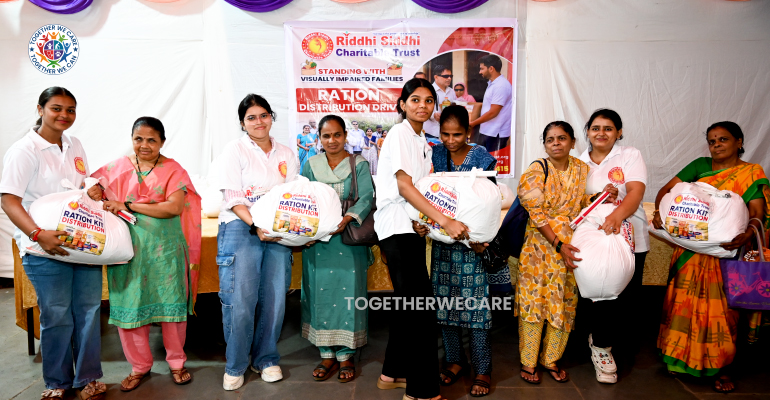
This Diwali, our team and volunteers set out with one simple goal: no blind family we could reach should have to depend on someone else for their festival food.
We prepared ration kits for [number] families in [location]. Each kit carried the basics a kitchen needs to cook with dignity — [list your items, e.g. rice, wheat flour, dal, sugar, cooking oil, tea, spices and festival sweets]. Enough to cook daily meals, and enough to make something special for Diwali.
The day of the distribution
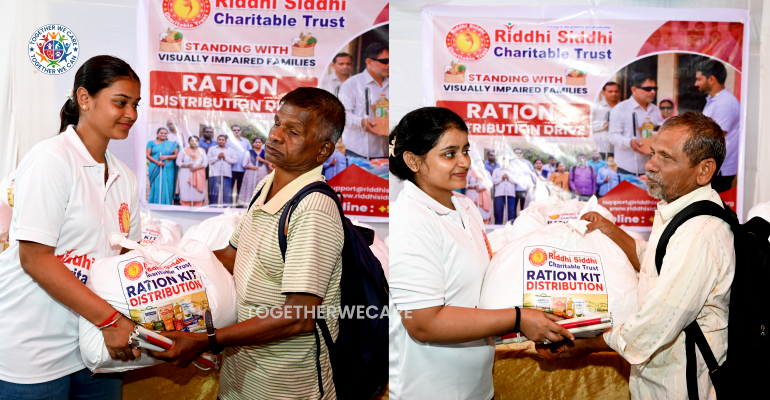
On 27th october , they came — some holding a white cane, some holding the arm of a friend or a child. Our volunteers met each person at the gate and walked with them, step by step, to their seat.
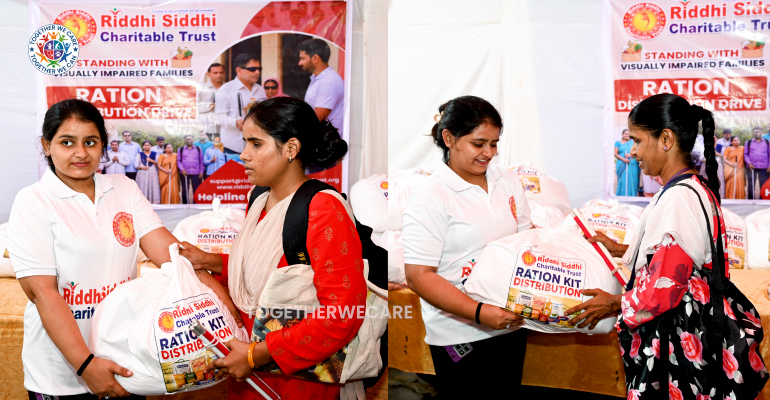
We did not just hand over a bag. We placed each person's hands on their kit and told them what was inside — this is the rice, this is the oil, this is the sweet box for Diwali. For someone who cannot see, knowing what you have is part of owning it.
Some smiled the moment they touched the packets. Some ran their fingers over the box of sweets for a long time. One elder held a volunteer's hand and blessed every one of us by name
There were no speeches that mattered more than those moments.
What a ration kit really gives
A bag of rice is not a big thing. But for a blind person who usually waits for help, it means a few weeks without having to ask. It means cooking on their own schedule. It means offering tea to a guest during the festival, instead of being the one who is always given to.
It means independence. It means respect. It means Diwali at home, on their own terms.
The light we cannot give, and the light we can
We cannot give back sight. But we can make sure the darkness of their eyes does not become the darkness of their kitchen.
This Diwali, the light did not only shine from diyas. It shone from full plates, warm stoves and grateful smiles.
Be part of the next light
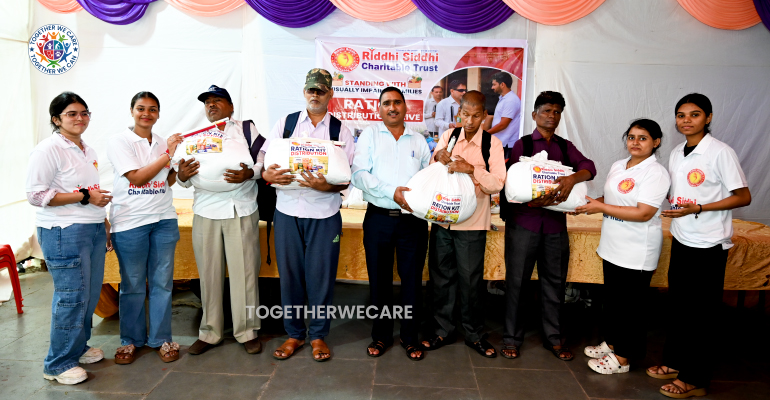
This was only possible because of our donors, volunteers and well-wishers. Thank you for standing with us.
The need does not end with one festival. If you would like to sponsor a ration kit, volunteer with us, or support our work for blind and visually impaired people, reach out at [9867948555].
Riddhi Siddhi Charitable Trust — because every home deserves its Diwali.
Know Your NGO
Together We Care is a humanitarian initiative committed to supporting vulnerable individuals, social causes, and grassroots communities across India. Every contribution is handled with complete transparency, direct ground execution, and instant 80G tax benefit receipts.
Recent Donors & Supporters
Be the first generous supporter to contribute to this cause.
